A good summary and detailed timeline of the action across the Pacific during 1944 is available here:
http://www.mca-marines.org/gazette/naval-war-pacific-1944
It references Tinian and Saipan where Jerry served.
Showing posts with label Pacific. Show all posts
Showing posts with label Pacific. Show all posts
Saturday, April 2, 2011


Saturday, June 19, 2010
Rare Color Film Action In The Pacific
Some rare color film showing aircraft and fighter pilot action in the WW II Pacific Theater.
This was sent along by Jerry's sister-in-law, Vivian.
Thanks
This was sent along by Jerry's sister-in-law, Vivian.
Thanks
Wednesday, May 19, 2010
Episode 10 The Pacific


Great night with Jerry and his fellow Marines!
We started the night off at the Greenville Inn with Jerry his son Steve, Ed Malloy, Carl Weston, Steve Cileli and myself. The usual buffoonery with Ed setting the tone at the dinner table. At one point Gary Tikoian stopped by to exchange pleasantries with everyone and trade barbs with Eddie.
Gary's uncle was Harry Kizirian. Rhode Island's most highly decorated Marine in World War Two. Harry was with E Company, 2 Batt., 22nd Marines, 6th MARDIV.
Jerry 's dad worked for the Post office for 39 years in Providence and was friends with Harry. Jerry met Harry after the war.
Great food and then back to Ed's house and sat down to watch The Pacific. We watched Episode 9 again. Steve Cileli does a great impression of Snafu. We won't delve to far into that. You had to be there.
Ed's wife, Ellie made coffee and provided dessert. She made a special dessert for Jerry. Steve Sherlock and myself gave Jerry a hard time because he usually raids the dessert table at family gatherings. "I like to try one of each to make sure it is safe to eat." Yeah okay!
Ryan Malloy came in to watch the final episode and to meet Jerry. Ryan is a big Marine Corps fan. He'd have to be. His grandfather is legendary Providence Police Lieutenant Ed Malloy, Eddie is a Marine and uncle Carl Weston is also a Marine.
Ryan listen intently to Jerry talk about his experiences in the Pacific with the 4th MARDIV.
Again, Jerry filled in some of the guys about calling a fire mission in on Japanese positions while with JASCO. Ed asked Jerry what weapon he carried and what he liked.
Jerry of course said he liked the M-1 Carbine.
'I carried about ninety rounds with me. Six clips. We would cut a cross or X in the bullet to add stopping power. I would use my pliers and take a file and make the cut. One guy used to sell the ammo. He would cut an X on the top and then sell the ammo for like 20 bucks for a hundred rounds."
It made a difference with the carbine round being equivalent to an A plus P38 special. It turned the bullet into a hollow point. I know some of you people are getting torqued about about the Geneva Convention. Listen, I'm pretty sure if Jerry went to Geneva to fight the Swiss, he'd abide by the Geneva convention.
Jerry spoke about the Japanese getting fired up on Saki and then launching a banzai charge at around 2200 at night.
"They'd get all fired up on the Saki and charge. A couple guys found a cave that was as high as a tenement house. It was loaded with beer and saki. A guard was placed on the cave so the Japs didn't sneak back and get liquored up. A couple days later we came off the line and made a pit stop. We were supposed to get some R and R. Shower, hot chow and rest up. We got into the beer and Saki. Then we got word that the battalion that relieved us got pretty well beaten up. We got word to go back and relieve them. That was pretty rough. I'm not sure how many guys weren't hung over. We smelled pretty bad too. The Japs must have smelled us coming"
When the final episode started it showed guys coming home. Bob Leckie got home and was dropped off by a cab driver. The driver refused to take Leckie's money. The cab driver was a paratrooper who jumped into Normandy. The Paratrooper says the Gyrenes had it tough.
Leckie gets his job back with the paper as a sports writer. He courts Vera Keller.
Lena Basilone goes to New Jersey and meets up with John's parents and brother George. George tells her that he saw the grave site at Iwo and he is with his fellow Marines. I pointed out the shoulder insignia of the Fourth on George Basilone' uniform. Jerry nodded.
Jerry told us about coming home via ship to California. He had to make a deposit for a Marine sergeant.
"This sergeant won $8,000.00 playing craps. He gave several of us $2,000.00 to bring back. We had his bank and name to deposit it in. He told us that if we stiffed him, he'd find us and get the money back or kill us. As soon as I got stateside I deposited the money." Carl Weston asked if Jerry got a fee. "Oh yeah about $500.00 dollars."
The scene cuts out to Sledge and Snafu on the train heading back from the west coast. Jerry told everyone how they boarded trains and headed home. It took six days to go across the country.
"We would stop every morning and get a breakfast and then they'd give us a box lunch for the day. We would pull right into a town and go into a Harvey House and eat. There was a movie that came out called the Harvey Girls. Judy Garland played in the movie. One place, we stopped right in the middle of the town, got out and went to a bar. They had closed the main door and moved everyone to a side entrance. Inside was a long bar filled with beer bottles. You could walk up, pick up your beer and pay for them at the other side. It was one of the most efficient operations I ever saw!
Eventually I got to Washington, DC and attempted to get back to Providence by train. I got picked up by the MP's. They asked for my orders. I was trying to get back to Rhode Island in time for my sister Fran's wedding. I was going to be the best man. She was marrying Vin Campbell. They put me in a truck along with a whole bunch of Marines and we got sent to Bainbridge, MD to muster out. I never made it to the wedding."
Snafu gets to New Orleans and gets up to leave. He looks at Sledge who is asleep. I think we all see Snafu is reluctant to say goodbye. He walks off the train letting Sledge sleep.
Jerry remarked that once he mustered out from Bainbridge, he got back to Rhode Island by train.
"I got to Providence and it was early. So I took a bus to Pawtucket and went home. My mother was there. I wanted to see my father, who was on his mail route in Providence. My mother immediately told me to head back to Providence as my father would be thrilled to see me. He had told everyone that I was in the Marine Corps and was rather proud of me. I went to the Post office and they told me where he would be. So I surprised him on his route and then I walked the route with him. He introduced me to everyone. My sister was still in Hawaii and Jack was still in Europe. Paul was in Paris at SHAPE.( Supreme Headquarters Allied Powers Europe) Tough duty. Ted was still with the Coast Guard and Henry was at sea with the Navy."
Editors Note: Paul was still in high school when Jerry returned home. He was the youngest of the group and didn't get to go to Europe until well after the WWII.
The show concluded with a post script on what happened to each of the Marines. It was uncanny how much the actors looked like the characters they portrayed.
Jerry was a little subdued near the end. I suspect he saw a little of himself in all of the characters. He has told his daughters that the series has evoked some memories.
He told me that he had a long night after the Iwo episode. He laughed but it was his stalwart character kicking in. It was clear that some strong feelings were brought back. We talked at length about Jonesy.
I was able to find some info on Jonesy. He died of his wounds and was buried at sea. He is still listed as missing/buried at sea in Department of Defense records. Jonesy is listed on the Tablet of the Missing in Honolulu at the War Memorial.
Eugene Sledge's father had worried about what would happen to his son after the war. He had treated returning soldiers from World War 1 and had seen the suffering of these veterans.
Sledge and others eventually figured it out and moved forward.
The highlight of the night came when Carl Weston gave Jerry a special gift. Carl had taken part in a contest on line answering questions about the Marine Corps. Carl won and received a bag of volcanic ash from Iwo Jima. Carl built a box, painted it Marine Corps Red and placed the Eagle Globe and Anchor emblem on the top.
Carl presented the box containing the ash from Iwo to Jerry. Jerry is still pretty thrilled over the gift. Something only MARINES would understand. Something so simple yet complex. That box and what it represents to Jerry and Carl transcends the boundaries of a generation of MARINES.
The Pacific is over and it has received great reviews from Jerry. It did bring back some memories. Not all good but he laughs and moves on keeping us all chuckling. Jerry says Tom Hanks and Steven Spielberg have hit the mark. He is awaiting the next project from them and has his own ideas.
The blog will continue. As Jerry said the other night; "I have a lot more stories to tell!"
Special thanks to Ellie and Ed Malloy for opening there wonderful home to Jerry and his Gang.
Especially to Ellie for her hospitality.
Thanks to Carl Weston ,Steve Cileli and Ryan Malloy for joining us on the evening of the final episode.
Jerry has been thrilled all week. His time with family and his MARINES mean so much.
"The man who will go where his colors will go, who will fight a phantom foe in a jungle or a mountain range and will suffer and die in the midst of incredible hardship, without complaint, is still what he has always been. He is the stuff of what legions are made. His pride is his colors and his regiment, his training hard and thorough and coldly realistic, to fit him for what he must face and his obedience is to orders. As a legionary, he held the gates of civilization for the classical world... he has been called UNITED STATES MARINE."
Lt. Col. T.R. Fehrenbach, US ARMY in "THIS KIND OF WAR"
We started the night off at the Greenville Inn with Jerry his son Steve, Ed Malloy, Carl Weston, Steve Cileli and myself. The usual buffoonery with Ed setting the tone at the dinner table. At one point Gary Tikoian stopped by to exchange pleasantries with everyone and trade barbs with Eddie.
Gary's uncle was Harry Kizirian. Rhode Island's most highly decorated Marine in World War Two. Harry was with E Company, 2 Batt., 22nd Marines, 6th MARDIV.
Jerry 's dad worked for the Post office for 39 years in Providence and was friends with Harry. Jerry met Harry after the war.
Great food and then back to Ed's house and sat down to watch The Pacific. We watched Episode 9 again. Steve Cileli does a great impression of Snafu. We won't delve to far into that. You had to be there.
Ed's wife, Ellie made coffee and provided dessert. She made a special dessert for Jerry. Steve Sherlock and myself gave Jerry a hard time because he usually raids the dessert table at family gatherings. "I like to try one of each to make sure it is safe to eat." Yeah okay!
Ryan Malloy came in to watch the final episode and to meet Jerry. Ryan is a big Marine Corps fan. He'd have to be. His grandfather is legendary Providence Police Lieutenant Ed Malloy, Eddie is a Marine and uncle Carl Weston is also a Marine.
Ryan listen intently to Jerry talk about his experiences in the Pacific with the 4th MARDIV.
Again, Jerry filled in some of the guys about calling a fire mission in on Japanese positions while with JASCO. Ed asked Jerry what weapon he carried and what he liked.
Jerry of course said he liked the M-1 Carbine.
'I carried about ninety rounds with me. Six clips. We would cut a cross or X in the bullet to add stopping power. I would use my pliers and take a file and make the cut. One guy used to sell the ammo. He would cut an X on the top and then sell the ammo for like 20 bucks for a hundred rounds."
It made a difference with the carbine round being equivalent to an A plus P38 special. It turned the bullet into a hollow point. I know some of you people are getting torqued about about the Geneva Convention. Listen, I'm pretty sure if Jerry went to Geneva to fight the Swiss, he'd abide by the Geneva convention.
Jerry spoke about the Japanese getting fired up on Saki and then launching a banzai charge at around 2200 at night.
"They'd get all fired up on the Saki and charge. A couple guys found a cave that was as high as a tenement house. It was loaded with beer and saki. A guard was placed on the cave so the Japs didn't sneak back and get liquored up. A couple days later we came off the line and made a pit stop. We were supposed to get some R and R. Shower, hot chow and rest up. We got into the beer and Saki. Then we got word that the battalion that relieved us got pretty well beaten up. We got word to go back and relieve them. That was pretty rough. I'm not sure how many guys weren't hung over. We smelled pretty bad too. The Japs must have smelled us coming"
When the final episode started it showed guys coming home. Bob Leckie got home and was dropped off by a cab driver. The driver refused to take Leckie's money. The cab driver was a paratrooper who jumped into Normandy. The Paratrooper says the Gyrenes had it tough.
Leckie gets his job back with the paper as a sports writer. He courts Vera Keller.
Lena Basilone goes to New Jersey and meets up with John's parents and brother George. George tells her that he saw the grave site at Iwo and he is with his fellow Marines. I pointed out the shoulder insignia of the Fourth on George Basilone' uniform. Jerry nodded.
Jerry told us about coming home via ship to California. He had to make a deposit for a Marine sergeant.
"This sergeant won $8,000.00 playing craps. He gave several of us $2,000.00 to bring back. We had his bank and name to deposit it in. He told us that if we stiffed him, he'd find us and get the money back or kill us. As soon as I got stateside I deposited the money." Carl Weston asked if Jerry got a fee. "Oh yeah about $500.00 dollars."
The scene cuts out to Sledge and Snafu on the train heading back from the west coast. Jerry told everyone how they boarded trains and headed home. It took six days to go across the country.
"We would stop every morning and get a breakfast and then they'd give us a box lunch for the day. We would pull right into a town and go into a Harvey House and eat. There was a movie that came out called the Harvey Girls. Judy Garland played in the movie. One place, we stopped right in the middle of the town, got out and went to a bar. They had closed the main door and moved everyone to a side entrance. Inside was a long bar filled with beer bottles. You could walk up, pick up your beer and pay for them at the other side. It was one of the most efficient operations I ever saw!
Eventually I got to Washington, DC and attempted to get back to Providence by train. I got picked up by the MP's. They asked for my orders. I was trying to get back to Rhode Island in time for my sister Fran's wedding. I was going to be the best man. She was marrying Vin Campbell. They put me in a truck along with a whole bunch of Marines and we got sent to Bainbridge, MD to muster out. I never made it to the wedding."
Snafu gets to New Orleans and gets up to leave. He looks at Sledge who is asleep. I think we all see Snafu is reluctant to say goodbye. He walks off the train letting Sledge sleep.
Jerry remarked that once he mustered out from Bainbridge, he got back to Rhode Island by train.
"I got to Providence and it was early. So I took a bus to Pawtucket and went home. My mother was there. I wanted to see my father, who was on his mail route in Providence. My mother immediately told me to head back to Providence as my father would be thrilled to see me. He had told everyone that I was in the Marine Corps and was rather proud of me. I went to the Post office and they told me where he would be. So I surprised him on his route and then I walked the route with him. He introduced me to everyone. My sister was still in Hawaii and Jack was still in Europe. Paul was in Paris at SHAPE.( Supreme Headquarters Allied Powers Europe) Tough duty. Ted was still with the Coast Guard and Henry was at sea with the Navy."
Editors Note: Paul was still in high school when Jerry returned home. He was the youngest of the group and didn't get to go to Europe until well after the WWII.
The show concluded with a post script on what happened to each of the Marines. It was uncanny how much the actors looked like the characters they portrayed.
Jerry was a little subdued near the end. I suspect he saw a little of himself in all of the characters. He has told his daughters that the series has evoked some memories.
He told me that he had a long night after the Iwo episode. He laughed but it was his stalwart character kicking in. It was clear that some strong feelings were brought back. We talked at length about Jonesy.
I was able to find some info on Jonesy. He died of his wounds and was buried at sea. He is still listed as missing/buried at sea in Department of Defense records. Jonesy is listed on the Tablet of the Missing in Honolulu at the War Memorial.
Eugene Sledge's father had worried about what would happen to his son after the war. He had treated returning soldiers from World War 1 and had seen the suffering of these veterans.
Sledge and others eventually figured it out and moved forward.
The highlight of the night came when Carl Weston gave Jerry a special gift. Carl had taken part in a contest on line answering questions about the Marine Corps. Carl won and received a bag of volcanic ash from Iwo Jima. Carl built a box, painted it Marine Corps Red and placed the Eagle Globe and Anchor emblem on the top.
Carl presented the box containing the ash from Iwo to Jerry. Jerry is still pretty thrilled over the gift. Something only MARINES would understand. Something so simple yet complex. That box and what it represents to Jerry and Carl transcends the boundaries of a generation of MARINES.
The Pacific is over and it has received great reviews from Jerry. It did bring back some memories. Not all good but he laughs and moves on keeping us all chuckling. Jerry says Tom Hanks and Steven Spielberg have hit the mark. He is awaiting the next project from them and has his own ideas.
The blog will continue. As Jerry said the other night; "I have a lot more stories to tell!"
Special thanks to Ellie and Ed Malloy for opening there wonderful home to Jerry and his Gang.
Especially to Ellie for her hospitality.
Thanks to Carl Weston ,Steve Cileli and Ryan Malloy for joining us on the evening of the final episode.
Jerry has been thrilled all week. His time with family and his MARINES mean so much.
"The man who will go where his colors will go, who will fight a phantom foe in a jungle or a mountain range and will suffer and die in the midst of incredible hardship, without complaint, is still what he has always been. He is the stuff of what legions are made. His pride is his colors and his regiment, his training hard and thorough and coldly realistic, to fit him for what he must face and his obedience is to orders. As a legionary, he held the gates of civilization for the classical world... he has been called UNITED STATES MARINE."
Lt. Col. T.R. Fehrenbach, US ARMY in "THIS KIND OF WAR"
Monday, May 10, 2010
Episode 9 The Pacific
Last night began with the 1st MARDIV moving up though Army lines to take over. Some bantering in the lines about the lack of prisoners comes about. Someone says "...We don't take prisoners." Shortly they come across several US soldiers guarding prisoners on the side of the trail.
Some remarks are made and a confrontation quickly escalates with the Japanese prisoners and the Marines. Something along the line of " I thought we didn't take prisoners. Yeah those are ARMY prisoners." Which quickly got a chuckle from Jerry. Jerry has some strong feelings left over from Saipan when the Marines moved forward and the Army stayed at the line of departure.
They Marines continue to move forward and the action begins right away. The rain and mud quickly deteriorate the Marines morale.
"I was fortunate with the weather. I only recall it raining one night on Iwo. It was a little cool but we just covered up. I don't remember it raining on Saipan or Tinian. That rain and mud must have been tough on Okinawa. I'm glad I didn't go to Korea. I don't do well in the cold. Well back then it didn't bother me when I was young. I'm still glad I didn't go."
"Jack Mainor went and he got hit up at the Chosin Resevoir. His mother got a letter that he was missing. That must have been tough on her. He was evacuated to an Army hospital in Japan. It wasn't until a Marine Officer came in and asked if there were any Marines present. That's how they found out Jack was alive."
In a typical Rhode Island story Jack Mainor was good friends with that Legendary Providence Cop Paul Chalko. He was wounded along with Jack at Chosin. He was a pretty grizzled veteran Sergeant went I got to meet him. Jack Mainor mentioned that he knew Sgt. Chalko and I mentioned it to him. Sort of smoothed things over!
At one point the Marines move forward when the Japanese pull back. Upon reaching the Japanese lines several refugees come down the draw. One of them is crying and trying to pass off a baby. She moves her clothes and a bomb is strapped to her body. The bomb detonates and the Japs push refugees ahead of them with pretty grim results.
"I am glad I didn't have to deal with that. At Saipan the Japanese made the civilians jump off Marpi Point. They had to jump off or get shot. Of course at Iwo we didn't come across any civilians at all."
At one point Sledge is summoned up to call fire in on an enemy strong point. Sledge breaks out a compass and calls for fire. I notice Jerry smiling. Pretty accurate portrayal?
"Oh yeah I was pretty good at that. Of course most of the time I had a map with all grids and coordinates marked off. I'd call for one round for effect. If it was on, I'd shoot the whole battery. If it was a ship they 'd open up with all the five inch guns. A battle ship, that would be the 16 inch guns. Pretty noisy with some good results. Yes I did that quite a bit." He was beaming with the trade mark Sherlock grin!
One of the Marines comes apart and starts firing at the Japanese lines at night. Several Marines try to stop him.
"Good way to get yourself killed. You could get shot by your own guys doing something like that. It happened. Guys reached the breaking point and for everyone it was different. I'm glad it never happened to me. Some guys, you never knew when it would happen. My buddy Sherlock from New York, remember when we talked of him? We were virtually civilians when we got on the ship leaving Hawaii. He lost it at the dock when the ship pulled away. He just didn't think he was going home.
"Guys marking the days in a book or writing down what happened. Not me, one day was the same as the rest. Just glad I got through the day in one piece "
Near the end of the episode the Marines with Sledge and Snafu are sunning themselves by the ocean. They get the word to saddle up. The officer says that a bomb was dropped on Japan and killed alot of Japanese. The Japs might finished.
I asked Jerry when he got the word about the atomic bomb.
"I was in my tent and I heard alot of gunfire. Guys were shooting everything. Couple mortar rounds went out too. When they told me, I started firing my carbine also." He motioned having a carbine in his hands and pulling the trigger. Jerry was giggling at this point. "I had already been practicing hitting beaches out on Maui. I wasn't that happy as I was pretty sure I'd get hit. Given all the casualties I knew I was do to get hit. I just dealt with it. When the bomb was dropped I just couldn't believe that one bomb could do all that damage. One bomb? Then a second bomb was dropped and the emperor surrendered. 250,000 people were killed. Well the alternative was that i and alot of other Americans would have been killed. They signed the peace agreements in Tokyo Bay on the deck of the Missouri. (USS Missouri BB-63).
It was the impossible dream. I was really glad. A lot Marines would have died hitting the home Islands. I know it sounds strange but that was it the war was over with two bombs."
The previews came on for next week and a couple guys had dress blues.
"I never had dress blues. I suppose I would have liked to but I'd had enough. Word came down that Col. Chambers was going to be the Provost Marshal in Shanghai, China. My buddy couldn't go so I was asked. I'd be the aide to Col. Chambers. I thought about and said I'd have to ask permission from my mother." He laughs at this point. You had to ask your mother? You're a combat Marine and you have to ask your mother for permission to go to China?
"Well yes. Listen my mother had seven kids involved one way or another in the war. I wasn't sure she'd approve of that. I didn't know what Jack had been through. I figured I 'd better ask my mother." Again he starts chuckling and adds; " Of course I'm not sure what my frame of mind was back then. I'd seen enough of killing. I was pretty sure a military career wasn't for me at that point. I 'd had enough. I wanted to go home and see my mother and the rest of the family."
What had happened to Jack? Had you heard anything?
"No. I had no idea what Jack had been through. No word at all. I never knew what happened to Jack until I got home. No mail. I was very glad that we were all home in one piece. It was a different time. What I had been through... it was enough. Later on during the Vietnam War I thought I didn't want my sons going through what I'd experienced. I'd go back before they went. It's hard to understand for some people. I knew what to do. Some things you don't ever forget. I would have been able to do the job. Not some kid who didn't know any better."
Jerry makes no apologies for his actions during the war. Nor about his feelings on the Atomic bombs being used. Jerry experienced war in its most simplest, brutal form. No time out, no do over button and no saying " No fair . You hurt my feelings."
So Cowboy up next time you've had a bad day. Your iPod, Cell phone or Laptop freezing up is not the end of the world.
Like Jerry, live for today. Because sometimes, for some people that's all there is at the end of the day. Like the Marines of World War Two fighting, surviving and some dying. Moving forward. All Servicemen and Women for all time. Stop and give them a quick thought.
"There is nothing particularly glorious about sweaty fellows, laden with killing tools, going along to fight.
And yet such a column represents a great deal more then individuals mustered in a division. All that is behind those men is in that column too; the old battles, long forgotten that have secured our nation...traditions of things endured and things accomplished, such as regiments hand down forever... and that abstract thing called patriotism, which I never heard combat soldiers mention- All this passes into the forward zone, to the point of contact, where war is girt with horrors.
And common men endure these horrors and overcome them, along with the insistent yearnings of the belly and the reasonable promptings of fear; and this, I think, is Glory."
Capt. John Thomason USMC ; "FIX BAYONETS" 1926
Some remarks are made and a confrontation quickly escalates with the Japanese prisoners and the Marines. Something along the line of " I thought we didn't take prisoners. Yeah those are ARMY prisoners." Which quickly got a chuckle from Jerry. Jerry has some strong feelings left over from Saipan when the Marines moved forward and the Army stayed at the line of departure.
They Marines continue to move forward and the action begins right away. The rain and mud quickly deteriorate the Marines morale.
"I was fortunate with the weather. I only recall it raining one night on Iwo. It was a little cool but we just covered up. I don't remember it raining on Saipan or Tinian. That rain and mud must have been tough on Okinawa. I'm glad I didn't go to Korea. I don't do well in the cold. Well back then it didn't bother me when I was young. I'm still glad I didn't go."
"Jack Mainor went and he got hit up at the Chosin Resevoir. His mother got a letter that he was missing. That must have been tough on her. He was evacuated to an Army hospital in Japan. It wasn't until a Marine Officer came in and asked if there were any Marines present. That's how they found out Jack was alive."
In a typical Rhode Island story Jack Mainor was good friends with that Legendary Providence Cop Paul Chalko. He was wounded along with Jack at Chosin. He was a pretty grizzled veteran Sergeant went I got to meet him. Jack Mainor mentioned that he knew Sgt. Chalko and I mentioned it to him. Sort of smoothed things over!
At one point the Marines move forward when the Japanese pull back. Upon reaching the Japanese lines several refugees come down the draw. One of them is crying and trying to pass off a baby. She moves her clothes and a bomb is strapped to her body. The bomb detonates and the Japs push refugees ahead of them with pretty grim results.
"I am glad I didn't have to deal with that. At Saipan the Japanese made the civilians jump off Marpi Point. They had to jump off or get shot. Of course at Iwo we didn't come across any civilians at all."
At one point Sledge is summoned up to call fire in on an enemy strong point. Sledge breaks out a compass and calls for fire. I notice Jerry smiling. Pretty accurate portrayal?
"Oh yeah I was pretty good at that. Of course most of the time I had a map with all grids and coordinates marked off. I'd call for one round for effect. If it was on, I'd shoot the whole battery. If it was a ship they 'd open up with all the five inch guns. A battle ship, that would be the 16 inch guns. Pretty noisy with some good results. Yes I did that quite a bit." He was beaming with the trade mark Sherlock grin!
One of the Marines comes apart and starts firing at the Japanese lines at night. Several Marines try to stop him.
"Good way to get yourself killed. You could get shot by your own guys doing something like that. It happened. Guys reached the breaking point and for everyone it was different. I'm glad it never happened to me. Some guys, you never knew when it would happen. My buddy Sherlock from New York, remember when we talked of him? We were virtually civilians when we got on the ship leaving Hawaii. He lost it at the dock when the ship pulled away. He just didn't think he was going home.
"Guys marking the days in a book or writing down what happened. Not me, one day was the same as the rest. Just glad I got through the day in one piece "
Near the end of the episode the Marines with Sledge and Snafu are sunning themselves by the ocean. They get the word to saddle up. The officer says that a bomb was dropped on Japan and killed alot of Japanese. The Japs might finished.
I asked Jerry when he got the word about the atomic bomb.
"I was in my tent and I heard alot of gunfire. Guys were shooting everything. Couple mortar rounds went out too. When they told me, I started firing my carbine also." He motioned having a carbine in his hands and pulling the trigger. Jerry was giggling at this point. "I had already been practicing hitting beaches out on Maui. I wasn't that happy as I was pretty sure I'd get hit. Given all the casualties I knew I was do to get hit. I just dealt with it. When the bomb was dropped I just couldn't believe that one bomb could do all that damage. One bomb? Then a second bomb was dropped and the emperor surrendered. 250,000 people were killed. Well the alternative was that i and alot of other Americans would have been killed. They signed the peace agreements in Tokyo Bay on the deck of the Missouri. (USS Missouri BB-63).
It was the impossible dream. I was really glad. A lot Marines would have died hitting the home Islands. I know it sounds strange but that was it the war was over with two bombs."
The previews came on for next week and a couple guys had dress blues.
"I never had dress blues. I suppose I would have liked to but I'd had enough. Word came down that Col. Chambers was going to be the Provost Marshal in Shanghai, China. My buddy couldn't go so I was asked. I'd be the aide to Col. Chambers. I thought about and said I'd have to ask permission from my mother." He laughs at this point. You had to ask your mother? You're a combat Marine and you have to ask your mother for permission to go to China?
"Well yes. Listen my mother had seven kids involved one way or another in the war. I wasn't sure she'd approve of that. I didn't know what Jack had been through. I figured I 'd better ask my mother." Again he starts chuckling and adds; " Of course I'm not sure what my frame of mind was back then. I'd seen enough of killing. I was pretty sure a military career wasn't for me at that point. I 'd had enough. I wanted to go home and see my mother and the rest of the family."
What had happened to Jack? Had you heard anything?
"No. I had no idea what Jack had been through. No word at all. I never knew what happened to Jack until I got home. No mail. I was very glad that we were all home in one piece. It was a different time. What I had been through... it was enough. Later on during the Vietnam War I thought I didn't want my sons going through what I'd experienced. I'd go back before they went. It's hard to understand for some people. I knew what to do. Some things you don't ever forget. I would have been able to do the job. Not some kid who didn't know any better."
Jerry makes no apologies for his actions during the war. Nor about his feelings on the Atomic bombs being used. Jerry experienced war in its most simplest, brutal form. No time out, no do over button and no saying " No fair . You hurt my feelings."
So Cowboy up next time you've had a bad day. Your iPod, Cell phone or Laptop freezing up is not the end of the world.
Like Jerry, live for today. Because sometimes, for some people that's all there is at the end of the day. Like the Marines of World War Two fighting, surviving and some dying. Moving forward. All Servicemen and Women for all time. Stop and give them a quick thought.
"There is nothing particularly glorious about sweaty fellows, laden with killing tools, going along to fight.
And yet such a column represents a great deal more then individuals mustered in a division. All that is behind those men is in that column too; the old battles, long forgotten that have secured our nation...traditions of things endured and things accomplished, such as regiments hand down forever... and that abstract thing called patriotism, which I never heard combat soldiers mention- All this passes into the forward zone, to the point of contact, where war is girt with horrors.
And common men endure these horrors and overcome them, along with the insistent yearnings of the belly and the reasonable promptings of fear; and this, I think, is Glory."
Capt. John Thomason USMC ; "FIX BAYONETS" 1926
Sunday, May 2, 2010
Episode 8 The Pacific
Jerry gave tonight's episode his seal of approval.
The show started with the 1st MARDIV recuperating from Peleliu. It then moved to John Basilone and followed him on the War Bond Tour, to home to his family and then out to Camp Pendleton with the 5th MARDIV.
John Basilone starts working out and pushes his men hard. Jerry began chuckling about Gunny Basilone barging into the barracks in the middle of the night, waking the Marines up.
He gave me a wry look and said; "What was it they said when they came into wake us up. One DI would always be screaming at us. Oh yeah it went something like this. .......Drop..." Sorry we are G Rated here. You Marines know exactly what the verse is!
Basilone gets married and he winds up with the 5th on Iwo. Jerry immediately said that the 5th was at the opposite end of the beach where he landed.
I asked if the depiction of combat was accurate. "Oh it was a pretty accurate portrayal of how it was. We woke up and they gave us a big breakfast of ham and eggs coffee.... everything. Then we got into the boats at about 0430 and circled. We didn't hit the beach until after 0900. The commanders had to make a decision as to whether we'd hit the beach or not. The thing that sticks out was the Volcanic ash. I ran on alot of beaches. Iwo was different. You couldn't get traction to run. It was extremely difficult and slowed everyone down in getting off the beach. You would dig a fox hole and it would collapse.
I can remember jumping into a hole and starting a conversation with a guy. It was a one sided conversation. I checked and he was dead. Wounded and dead were everywhere. You have to understand that almost 1800 guys were piling onto the beach from every wave. Too many guys were put on the beach at the same time.
I really feel that alot of the casualties resulted from the poor traction. You couldn't go anywhere fast. So if you were getting shot at it was tough running on the beach. I think that's why so many guys got hit. No where to go and everyone bunched up.
I finally saw a bunch of guys underneath a pill box. They weren't getting shot at as the Japanese couldn't get the angle. So I ran to where they were. Then I threw a couple of grenades up at the pillbox. Eventually some demolition guys came over and they put bangalore torpedos underneath. They called "fire in the hole". Then dropped the Pillbox down the hill. We cleaned it out and used it as a commo bunker with all of our radios.
The medics got pretty busy. They did a tremendous job."
When did you know about Basilone getting hit?
"It wasn't for several days later that we found out. We were busy with are own stuff and when it came out that he was killed it overshadowed alot of other people who got killed. Basilone was famous because of his actions at Guadalcanal. Some high ranking officers were killed on Iwo. More was said about Basilone because of his exploits."
When did Jonesy get hit?
"Jonesy got hit about eight or nine days after we landed. That was awful hard. I was close to him because we had formed a bond in combat. We had cleaned out caves together on Saipan. We lost so many guys in a short amount of time at Iwo.
I was sitting there on the beach after Jones got hit a second time in the landing craft. Another Marine came along and asked if I was OK. I said I am alive." The Marine replied. " Ok grab your gear and move out . We got to get back up to the front." So off I moved. It wasn't the same though." Jerry continued
I wasn't really close in a sense to anyone else. Jones and I had a special bond. We had been through alot at Saipan. I went out for a beer with the replacements but it was different."(Back in Hawaii)
We also didn't experience any Banzai charges like on Saipan. The Japanese commander told each Imperial soldier to kill at least 10 of us. At the end sometime in March the Japs did launch a surprise attack on the airfield. Quite a few guys got killed. All the Japs were killed though."
Jonesy
Jones suffered a leg injury where most of his leg was gone. A tourniquet was placed on his leg. Jerry and several Marines rushed him to the beach. Jones was put on an LCVP with other wounded Marines. As the boat was heading out to the hospital ship it took a direct hit. Jerry immediately swam out with other Marines and they brought the wounded to shore.
Jones had now lost his left arm in addition to his leg. Jerry never says who, but I suspect he placed the tourniquet on Jones. Jerry put Jones along with the wounded on another boat and it went to the the hospital ship.
Jerry got word several days later that Jones had died on the ship.
Some of you have heard a version of this story. This episode opened up some more chapters in Jerry's life. It is the story of a Marine in combat. Hard and brutal. Somethings that won't ever be forgotten. Jonesy and Jerry were tight. That was made very clear.
"Just cruel and unusual punishment is all I can think of what happened. Guys getting hit multiple times. We'd fix a guy up and he'd get hit again. It was so unfair in a sense. I just still don't understand why. To this day... I was just so very lucky. I never realized how lucky I really was. I found out not to long ago that of 900 guys that hit the beach at Iwo Jima in my unit, only 150 walked off." Jerry got that far away look and shrugged his shoulders.
We spoke of things that took place in the days afterwards and then when he left Iwo. Higher Headquarters put out the word looking for volunteers to man the Navy Chow Lines. FOOD??? What Sherlock would say no to food? ( Damn near had a riot on Sunday when he was put on portions for dessert after Kegan's confirmation.)
Jerry left Iwo Jima and moved onto a US Navy ship. The Sailors treated him well upon arrival. Jerry prepped the chow on the Navy vessel.
"I was pretty ragged. The sailors ran a hot shower and then put me in Navy dungarees. They made me steak and I got to eat plenty of ice cream. They really treated me very well. Eventually a Gunny caught up to me just before we got to Hawaii and told me to put on USMC dungarees. That was the end of that." That trademark grin and laugh.
Jerry would commence training for an as of yet undetermined target. He felt that it may have been Honsho.
Jack Sherlock was in a Tank Destroyer Battalion pushing through German lines.
"My brother Jack was involved at the battle of the Remagen Bridge and helped capture it."
That battle took place 7-8 March 1945. German troops did attempt to blew it but it was a low order detonation. The bridge was captured intact and vehicles got over it. The bridge finally did collapse on 17 March-1945.
Gunnery Sgt. John Basilone lay at Iwo Jima unti his remains were moved to Arlington National Cemetary in 1948.
27 Medals of Honor were awarded for actions at Iwo Jima. 23 to US MARINES. 4 to Sailors.
That would amount to 28% of the 82 Medals of Honor awarded to the Marine Corps in World War Two.
More Medals of Honor then any other Battle to date.
25,851 casualties. 1 in 3 would die.
6,285 Americans were killed there. US Marines, Sailors and Coast Guardsmen.
One of those was PFC Jones 1st JASCO 3rd BN 25th Marines 4th MARDIV from Colorado.
"Among the men who fought at Iwo Jima, Uncommon Valor was a Common Virtue."
Admiral ChesterW. Nimitz
March 1945
The show started with the 1st MARDIV recuperating from Peleliu. It then moved to John Basilone and followed him on the War Bond Tour, to home to his family and then out to Camp Pendleton with the 5th MARDIV.
John Basilone starts working out and pushes his men hard. Jerry began chuckling about Gunny Basilone barging into the barracks in the middle of the night, waking the Marines up.
He gave me a wry look and said; "What was it they said when they came into wake us up. One DI would always be screaming at us. Oh yeah it went something like this. .......Drop..." Sorry we are G Rated here. You Marines know exactly what the verse is!
Basilone gets married and he winds up with the 5th on Iwo. Jerry immediately said that the 5th was at the opposite end of the beach where he landed.
I asked if the depiction of combat was accurate. "Oh it was a pretty accurate portrayal of how it was. We woke up and they gave us a big breakfast of ham and eggs coffee.... everything. Then we got into the boats at about 0430 and circled. We didn't hit the beach until after 0900. The commanders had to make a decision as to whether we'd hit the beach or not. The thing that sticks out was the Volcanic ash. I ran on alot of beaches. Iwo was different. You couldn't get traction to run. It was extremely difficult and slowed everyone down in getting off the beach. You would dig a fox hole and it would collapse.
I can remember jumping into a hole and starting a conversation with a guy. It was a one sided conversation. I checked and he was dead. Wounded and dead were everywhere. You have to understand that almost 1800 guys were piling onto the beach from every wave. Too many guys were put on the beach at the same time.
I really feel that alot of the casualties resulted from the poor traction. You couldn't go anywhere fast. So if you were getting shot at it was tough running on the beach. I think that's why so many guys got hit. No where to go and everyone bunched up.
I finally saw a bunch of guys underneath a pill box. They weren't getting shot at as the Japanese couldn't get the angle. So I ran to where they were. Then I threw a couple of grenades up at the pillbox. Eventually some demolition guys came over and they put bangalore torpedos underneath. They called "fire in the hole". Then dropped the Pillbox down the hill. We cleaned it out and used it as a commo bunker with all of our radios.
The medics got pretty busy. They did a tremendous job."
When did you know about Basilone getting hit?
"It wasn't for several days later that we found out. We were busy with are own stuff and when it came out that he was killed it overshadowed alot of other people who got killed. Basilone was famous because of his actions at Guadalcanal. Some high ranking officers were killed on Iwo. More was said about Basilone because of his exploits."
When did Jonesy get hit?
"Jonesy got hit about eight or nine days after we landed. That was awful hard. I was close to him because we had formed a bond in combat. We had cleaned out caves together on Saipan. We lost so many guys in a short amount of time at Iwo.
I was sitting there on the beach after Jones got hit a second time in the landing craft. Another Marine came along and asked if I was OK. I said I am alive." The Marine replied. " Ok grab your gear and move out . We got to get back up to the front." So off I moved. It wasn't the same though." Jerry continued
I wasn't really close in a sense to anyone else. Jones and I had a special bond. We had been through alot at Saipan. I went out for a beer with the replacements but it was different."(Back in Hawaii)
We also didn't experience any Banzai charges like on Saipan. The Japanese commander told each Imperial soldier to kill at least 10 of us. At the end sometime in March the Japs did launch a surprise attack on the airfield. Quite a few guys got killed. All the Japs were killed though."
Jonesy
Jones suffered a leg injury where most of his leg was gone. A tourniquet was placed on his leg. Jerry and several Marines rushed him to the beach. Jones was put on an LCVP with other wounded Marines. As the boat was heading out to the hospital ship it took a direct hit. Jerry immediately swam out with other Marines and they brought the wounded to shore.
Jones had now lost his left arm in addition to his leg. Jerry never says who, but I suspect he placed the tourniquet on Jones. Jerry put Jones along with the wounded on another boat and it went to the the hospital ship.
Jerry got word several days later that Jones had died on the ship.
Some of you have heard a version of this story. This episode opened up some more chapters in Jerry's life. It is the story of a Marine in combat. Hard and brutal. Somethings that won't ever be forgotten. Jonesy and Jerry were tight. That was made very clear.
"Just cruel and unusual punishment is all I can think of what happened. Guys getting hit multiple times. We'd fix a guy up and he'd get hit again. It was so unfair in a sense. I just still don't understand why. To this day... I was just so very lucky. I never realized how lucky I really was. I found out not to long ago that of 900 guys that hit the beach at Iwo Jima in my unit, only 150 walked off." Jerry got that far away look and shrugged his shoulders.
We spoke of things that took place in the days afterwards and then when he left Iwo. Higher Headquarters put out the word looking for volunteers to man the Navy Chow Lines. FOOD??? What Sherlock would say no to food? ( Damn near had a riot on Sunday when he was put on portions for dessert after Kegan's confirmation.)
Jerry left Iwo Jima and moved onto a US Navy ship. The Sailors treated him well upon arrival. Jerry prepped the chow on the Navy vessel.
"I was pretty ragged. The sailors ran a hot shower and then put me in Navy dungarees. They made me steak and I got to eat plenty of ice cream. They really treated me very well. Eventually a Gunny caught up to me just before we got to Hawaii and told me to put on USMC dungarees. That was the end of that." That trademark grin and laugh.
Jerry would commence training for an as of yet undetermined target. He felt that it may have been Honsho.
Jack Sherlock was in a Tank Destroyer Battalion pushing through German lines.
"My brother Jack was involved at the battle of the Remagen Bridge and helped capture it."
That battle took place 7-8 March 1945. German troops did attempt to blew it but it was a low order detonation. The bridge was captured intact and vehicles got over it. The bridge finally did collapse on 17 March-1945.
Gunnery Sgt. John Basilone lay at Iwo Jima unti his remains were moved to Arlington National Cemetary in 1948.
27 Medals of Honor were awarded for actions at Iwo Jima. 23 to US MARINES. 4 to Sailors.
That would amount to 28% of the 82 Medals of Honor awarded to the Marine Corps in World War Two.
More Medals of Honor then any other Battle to date.
25,851 casualties. 1 in 3 would die.
6,285 Americans were killed there. US Marines, Sailors and Coast Guardsmen.
One of those was PFC Jones 1st JASCO 3rd BN 25th Marines 4th MARDIV from Colorado.
"Among the men who fought at Iwo Jima, Uncommon Valor was a Common Virtue."
Admiral ChesterW. Nimitz
March 1945
Marine Corps Weapons
Thompson

1917 Revolver

Colt 1911A1
Reising M55

Wold War II saw the defense industry playing a big catch up game with weapons for the War effort.
We have already profiled some weapons here. Several manufacturers such as Harrington and Richardson in Worcester and United Defense in New Haven began jumping in with all makes of submachine guns. The Reising Model 55 with a folding stock was adopted by the Fleet Marine Force (FMF), Raiders and ParaMarines. Marines carried them into Guadalcanal with some dismal results. It was a .45 Auto Caliber closed bolt SMG. (The Thompson SMG fired from an open bolt.) It contained more moving parts. Like the Reising, it was also hand fitted. Meaning that the parts were not interchangeable. The Reising was designed for Law Enforcment where hand fitted parts might not make a difference. However, in a combat environment where field maintenance was everyday, it became a problem. Eventually the Resing was pulled from the FMF.
"I wanted the Thompson SMG. I thought I was qualifying with it at Hawaii and I'd be able to get issued. Apparently, the course didn't conform to Marine Corps standards. I ended up with the Carbine. I didn't like the BAR. Heavy and it recoiled pretty hard. We had to fam fire all the weapons in case something happened, we knew how to operate everything."
Other weapons we've seen are the M1917 Revolver. Manufactured by Colt and Smith & Wesson. It required half moon clips that you'd put the .45 ACP rounds into and then load into the cylinder. It was a manstopper. Eugene Sledge's character is seen sporting one with a lanyard and the 1917 Cavalry holster. Standard fair back in the day when carrying the 1917 Revolver.
Jerry's fellow Marine, Jones carried a Colt Single Action Army in a western rig. I asked Jerry about Marines carrying various pistols.
"It was personal thing if guys had them they carried them. No one said anything because we were in combat. You wouldn't get away with it Stateside. In combat it was different. It was nice to have a pistol when Jones and I had to clear caves."
The Thompson enjoyed much fame. Carried by gangsters in the Roaring Twenties. Anyone could buy them back them. John Dillinger and Machine Gun Kelly made them famous. Designed by Col. John Thompson for Trench warfare, it was a heavy but dependable weapon. Several models were fielded. It came with a 20 round box or stick magazine. The Tommy gun fired from an open bolt. You can use the magazine to repel boarders if required. Fully loaded it is pretty heavy. A fifty round drum magazine was issued early in the war but it proved cumbersome.

Reising M55

Wold War II saw the defense industry playing a big catch up game with weapons for the War effort.
My grandfather who was a a National Guard officer told me of picking up weapons all over New England and shipping them to England for Lend Lease. People donated rifles, shotguns and pistols of every make. Meanwhile the War Department was scrambling to mass produce weapons for the US Army and Marine Corps.
We have already profiled some weapons here. Several manufacturers such as Harrington and Richardson in Worcester and United Defense in New Haven began jumping in with all makes of submachine guns. The Reising Model 55 with a folding stock was adopted by the Fleet Marine Force (FMF), Raiders and ParaMarines. Marines carried them into Guadalcanal with some dismal results. It was a .45 Auto Caliber closed bolt SMG. (The Thompson SMG fired from an open bolt.) It contained more moving parts. Like the Reising, it was also hand fitted. Meaning that the parts were not interchangeable. The Reising was designed for Law Enforcment where hand fitted parts might not make a difference. However, in a combat environment where field maintenance was everyday, it became a problem. Eventually the Resing was pulled from the FMF.
When Jerry got to Hawaii he qualified with an M1 Carbine. He wanted the Colt .45 1911A1, it had great stopping power but I think he was glad to have the Carbine.
He " Fam" ( familiarization) fired the Thompson SMG, 1911A1, 1919a1 Light Machinegun, Browning Automatic Rifle and the MA DEUCE. Browning .50 Cal Heavy Machine gun.
"I wanted the Thompson SMG. I thought I was qualifying with it at Hawaii and I'd be able to get issued. Apparently, the course didn't conform to Marine Corps standards. I ended up with the Carbine. I didn't like the BAR. Heavy and it recoiled pretty hard. We had to fam fire all the weapons in case something happened, we knew how to operate everything."
Other weapons we've seen are the M1917 Revolver. Manufactured by Colt and Smith & Wesson. It required half moon clips that you'd put the .45 ACP rounds into and then load into the cylinder. It was a manstopper. Eugene Sledge's character is seen sporting one with a lanyard and the 1917 Cavalry holster. Standard fair back in the day when carrying the 1917 Revolver.
Jerry's fellow Marine, Jones carried a Colt Single Action Army in a western rig. I asked Jerry about Marines carrying various pistols.
"It was personal thing if guys had them they carried them. No one said anything because we were in combat. You wouldn't get away with it Stateside. In combat it was different. It was nice to have a pistol when Jones and I had to clear caves."
The Thompson enjoyed much fame. Carried by gangsters in the Roaring Twenties. Anyone could buy them back them. John Dillinger and Machine Gun Kelly made them famous. Designed by Col. John Thompson for Trench warfare, it was a heavy but dependable weapon. Several models were fielded. It came with a 20 round box or stick magazine. The Tommy gun fired from an open bolt. You can use the magazine to repel boarders if required. Fully loaded it is pretty heavy. A fifty round drum magazine was issued early in the war but it proved cumbersome.
See you tonight after "The Pacific".
Thursday, April 29, 2010
Episode 7 Pacific
On Sunday night I talked a little to Jerry before the Episode came on about boot camp.
"I took a train from Providence with about maybe twenty other guys. We got down to Washington DC and got off there. We were herded to another area where a Coastliner was waiting for us. Everyone on that train was headed to Parris Island.
Upon arrival we were met by Master Gunnery Sgt. Lou Diamond." With a gleeful laugh and hand gesture Jerry said" Oh yeah that was something else. 'We were useless, the worst excuse for Marine recruits he had ever seen in his career. 'They were just trying to break us down. Which they did. But there was a purpose for it. It probably helped save a lot of Marines in combat. If they said go you just went. It was automatic. We were well trained."
People have to move as one in combat but you still can't shake the feeling of fear. In reading some books on combat in World War two it was felt by a lot of doctors that men could only endure sustained combat for about a month. It would begin to take a toll. What these Marines went through was pretty tough combat.
We see Sledge lose his LT. very shortly. During the night the Japanese began to infiltrate into the Marine lines. One guy got out of his fox hole and was killed. Master Sgt. Holt dresses down his Marines and tells them this is what happens when you leave your fox hole at night.
Jerry commented "Yeah, you didn't leave your fox hole. The night was tough because your eyes played tricks on you. The least little noise and the whole line would open up and it was tough to hear the cease fire being called. One night I got delayed out in front of the lines with my Lt. while scouting. We didn't dare cross back into our lines."
Well I said how about all those World War Two movies where they said hey who plays for the Yankees?
"Oh my God that was BS. You didn't say a word. You just stayed where you were and hoped you didn't run into the Japanese. Any noise would have brought a response from our lines. No such thing as friendly fire. My Lt. and I stayed out there all night. I was dying for a cigarette. Then the Japanese were crawling by us. At one point I could have reached out and touched them. I was dying for a cigarette." Then he starts laughing and says; We got through the night and then came back into the lines at daybreak. No big deal."
No big deal? Ah Okay. I think that would be described as an underwear changing event.
At one point while the Marines are moving up through the the hills into the Japanese lines and a guy has to relieve himself. He walks over to a cave entrance. As soon as he gets his pants down he is charged by a Japanese soldier. The Marine shoots the Japanese soldier and begins to make a tactical retrograde. (Unassessing the area some might call it.) Jerry begins laughing hysterically along with the Maines on the show as another Jap chases the Marine who is still trying to get his pants up. Finally the Japanese soldier is shot and the Marine is pulling up his pants hollering at his fellow marines for taking so long to shoot the Jap.
Jerry is still laughing clearly he has been reminded of something.
"On Iwo this guy was squatting down relieving himself. All of a sudden the enemy opened up on him. He started running with his pants at half mast and I just started laughing. Then I was howling. It was a good thing the guy was altittle further down and the Japs were shooting. Otherwise he'd have probably come over and beat the sh*& out of me. I was laughing so hard I wouldn't have been able to defend myself. Oh God that was funny." Jerry gives that classic grin and shakes his head.
As the Marines are moving up further into the hills they call for the CO. He passes up to the front. A short moment later and gunfire breaks out in the same direction the CO was heading. The word passes down that the Captain was killed. The Marines are clearly hit hard by the loss of the Captain.
I commented that it must have been hard losing a good officer.
"Yes it was hard. It was hard losing a friend. It ah... it was just hard, you know. You get to know these guys and we were like brothers. The loss was hard. You never knew when it would happen. But you did your job. We had to keep going."
The episode ends with the Sledge and his fellow Marines being returned to the rear area and being greeted by Red Cross workers giving them Orange Juice.
The episode also covered Basilone on the Bond tour and getting antsy to be back in the Corps.
Jerry again just shakes his head.
"I don't know why he went back. I had seen enough after Saipan and Tinian. After Iwo I just know my luck would have run out. We were suppose to hit the island of Honsho. It was a home Island. I was pretty sure I was going to get hit." Jerry gives a shrug of the shoulders and stares at the television with a very resigned look. "We had lost a lot of guys. The odds were against me."
Jerry gave the episode an overall great rating saying it had that mix of combat and life as a Marine.
We were getting together this Sunday for a big gathering of Jerry's Marine Corps buddies from Providence Police Marines. However it has been postponed to to the last episode when we can gather everyone and head for Chow and them back to view the last episode with Jerry.
Stay tuned to WPRI Channel 12 with Walt Buteau, Jerry and his son Steve Sherlock for "Street Stories."
" My answer as to why the Marines get the toughest jobs is because the average Leatherneck is a much better fighter. He has far much more guts, courage and better officers... These boys out here have pride in the Marine Corps and fight to the end no matter what the cost.
2nd Lt. Richard Kennard USMC, Peleliu, World War Two
"I took a train from Providence with about maybe twenty other guys. We got down to Washington DC and got off there. We were herded to another area where a Coastliner was waiting for us. Everyone on that train was headed to Parris Island.
Upon arrival we were met by Master Gunnery Sgt. Lou Diamond." With a gleeful laugh and hand gesture Jerry said" Oh yeah that was something else. 'We were useless, the worst excuse for Marine recruits he had ever seen in his career. 'They were just trying to break us down. Which they did. But there was a purpose for it. It probably helped save a lot of Marines in combat. If they said go you just went. It was automatic. We were well trained."
People have to move as one in combat but you still can't shake the feeling of fear. In reading some books on combat in World War two it was felt by a lot of doctors that men could only endure sustained combat for about a month. It would begin to take a toll. What these Marines went through was pretty tough combat.
We see Sledge lose his LT. very shortly. During the night the Japanese began to infiltrate into the Marine lines. One guy got out of his fox hole and was killed. Master Sgt. Holt dresses down his Marines and tells them this is what happens when you leave your fox hole at night.
Jerry commented "Yeah, you didn't leave your fox hole. The night was tough because your eyes played tricks on you. The least little noise and the whole line would open up and it was tough to hear the cease fire being called. One night I got delayed out in front of the lines with my Lt. while scouting. We didn't dare cross back into our lines."
Well I said how about all those World War Two movies where they said hey who plays for the Yankees?
"Oh my God that was BS. You didn't say a word. You just stayed where you were and hoped you didn't run into the Japanese. Any noise would have brought a response from our lines. No such thing as friendly fire. My Lt. and I stayed out there all night. I was dying for a cigarette. Then the Japanese were crawling by us. At one point I could have reached out and touched them. I was dying for a cigarette." Then he starts laughing and says; We got through the night and then came back into the lines at daybreak. No big deal."
No big deal? Ah Okay. I think that would be described as an underwear changing event.
At one point while the Marines are moving up through the the hills into the Japanese lines and a guy has to relieve himself. He walks over to a cave entrance. As soon as he gets his pants down he is charged by a Japanese soldier. The Marine shoots the Japanese soldier and begins to make a tactical retrograde. (Unassessing the area some might call it.) Jerry begins laughing hysterically along with the Maines on the show as another Jap chases the Marine who is still trying to get his pants up. Finally the Japanese soldier is shot and the Marine is pulling up his pants hollering at his fellow marines for taking so long to shoot the Jap.
Jerry is still laughing clearly he has been reminded of something.
"On Iwo this guy was squatting down relieving himself. All of a sudden the enemy opened up on him. He started running with his pants at half mast and I just started laughing. Then I was howling. It was a good thing the guy was altittle further down and the Japs were shooting. Otherwise he'd have probably come over and beat the sh*& out of me. I was laughing so hard I wouldn't have been able to defend myself. Oh God that was funny." Jerry gives that classic grin and shakes his head.
As the Marines are moving up further into the hills they call for the CO. He passes up to the front. A short moment later and gunfire breaks out in the same direction the CO was heading. The word passes down that the Captain was killed. The Marines are clearly hit hard by the loss of the Captain.
I commented that it must have been hard losing a good officer.
"Yes it was hard. It was hard losing a friend. It ah... it was just hard, you know. You get to know these guys and we were like brothers. The loss was hard. You never knew when it would happen. But you did your job. We had to keep going."
The episode ends with the Sledge and his fellow Marines being returned to the rear area and being greeted by Red Cross workers giving them Orange Juice.
The episode also covered Basilone on the Bond tour and getting antsy to be back in the Corps.
Jerry again just shakes his head.
"I don't know why he went back. I had seen enough after Saipan and Tinian. After Iwo I just know my luck would have run out. We were suppose to hit the island of Honsho. It was a home Island. I was pretty sure I was going to get hit." Jerry gives a shrug of the shoulders and stares at the television with a very resigned look. "We had lost a lot of guys. The odds were against me."
Jerry gave the episode an overall great rating saying it had that mix of combat and life as a Marine.
We were getting together this Sunday for a big gathering of Jerry's Marine Corps buddies from Providence Police Marines. However it has been postponed to to the last episode when we can gather everyone and head for Chow and them back to view the last episode with Jerry.
Stay tuned to WPRI Channel 12 with Walt Buteau, Jerry and his son Steve Sherlock for "Street Stories."
" My answer as to why the Marines get the toughest jobs is because the average Leatherneck is a much better fighter. He has far much more guts, courage and better officers... These boys out here have pride in the Marine Corps and fight to the end no matter what the cost.
2nd Lt. Richard Kennard USMC, Peleliu, World War Two
Wednesday, April 21, 2010
Jerry soon to be one of the "Street Stories"
Walt Buteau, reporter for WPRI - Channel 12 in Providence, contacted us today to record a segment for a future "Street Story." Arrangements were made and Jerry talked with Walt for about an hour about his experiences in the Pacific, how the blog started, etc.
If all goes according to schedule, the segment should be broadcast on Apr 30th at 6:15 PM. It will also be re-broadcast on Saturday morning at 7:40 AM for you early birds.
If you can't catch the live broadcast, don't worry. It will also be posted to the Facebook page for "Street Stories" and we'll make sure to get a copy or at least a link to post it here.
If all goes according to schedule, the segment should be broadcast on Apr 30th at 6:15 PM. It will also be re-broadcast on Saturday morning at 7:40 AM for you early birds.
If you can't catch the live broadcast, don't worry. It will also be posted to the Facebook page for "Street Stories" and we'll make sure to get a copy or at least a link to post it here.
Monday, April 19, 2010
Episode 6 Pacific
18 April 1942 Lt. Col. James Doolittle USAAF with 16 B-25 Bombers and 80 Airmen launch from the aircraft carrier USS Hornet and strike Japan.
I asked Jerry if he remembered much about the incident.
Jerry was happy with Episode 6. The depiction of guys getting wounded and getting a corpsman up to treat them. The confusion during combat. Scouting up front and getting shot at. All things that Jerry has experienced first hand. He has that great sense of humor and laughs a lot about the crazy things that happened in combat.
He said that there were alot of guys from the southern states.
Jerry give tonight's episode high marks.
Stay tuned, G-3 (operations) is planning to have something special cooking for the episode covering the Invasion of Iwo Jima. Get together with some of Jerry's Marine buddies from the Birthday Ball for chow and them watching the show. Should be good!
"There are two kind of people who understand the MARINES. Marines and the enemy. Everyone else has a second hand opinion."
Unknown
I asked Jerry if he remembered much about the incident.
"Well it was in the papers about the raid. I was a junior in high school. It was a big deal. Hey the military struck right at the heart of Japan."On Pacific Jerry agreed water was a problem. He recalled on Saipan that his canteen got hit with shrapnel. When he brought a wounded Marine back to the beach he found a quick remedy for no canteen.
"I grabbed the wounded guys canteen. He didn't need it and I'd put it to good use." Simple shrug of the shoulders.Guys getting hit.
"Well if a guy got hit several guys would jump up and carry the stretcher. Depending on the size of the guy we'd have two or four guys. There was never a shortage. I and others always felt that if we were hit, someone would take care of us in the same fashion. Plus it got you out of immediate gunfire for a few minutes. I'd try and get a hot cup of coffee and grab as much ammo as I could get, to bring back. We'd drop our packs and ammo belts and grab more at the beach head.'
"The LST's that beached or damaged would be set a up as an aid station. The serious cases would be taken out to the hospital ships."Chamorro Prisoners at Saipan.
"We took a lot of Chamorro Prisoners. They were natives the island. The Japs had forced them into working for them. Myself and another guy were bringing Chamorro prisoners to a camp and a woman went into labor. The other guy said 'Have you ever birthed an animal?" "Ah gee no, I grew up in the city."
The other Marine said no sweat. He delivered the baby and I helped. I carried the baby back to the POW camp. The mother was in better shape then I was for God's sake. It was an experience watching the baby get born and helping."The assault on the airfield on Pacific.
"The thing that strikes me the most is the guys bunching up. We were told that you shouldn't ever bunch up. Lot of guys together. One shell could take everyone out, or a machine gun could do alot of damage . But then you had the senior guys saying follow me or stay close."
"I remember one guy in combat running around hollering; ' I can't find my plate I lost my plate.' He had lost the base plate for the mortar. I was always glad I wasn't in the weapons section carrying the parts to the mortar or the machine gun. It was bad enough having to run like hell but to carry all that equipment..." Then that trade mark chuckle.Jerry said it was a great depiction of combat in the Pacific Theater of Operations. Speilberg and Hanks have captured the moments well. When the Gunny said ' Check your ammo. What do you got and what do you need. Standby to standby." Jerry chuckled.
"Yeah, hey you were glad to have survived. Make a check of your equipment and grab a smoke if you could. You know they filled water in the jerry can. Then they put fuel in them. I think the Navy carted those cans all over the Pacific. God the water tasted like sh#@ from those cans."Intelligence sources say Jerry was getting a little tired of the soap opera part with the girlfriends and other drama. Lets just say G2 had it on good authority.
Jerry was happy with Episode 6. The depiction of guys getting wounded and getting a corpsman up to treat them. The confusion during combat. Scouting up front and getting shot at. All things that Jerry has experienced first hand. He has that great sense of humor and laughs a lot about the crazy things that happened in combat.
He said that there were alot of guys from the southern states.
"They used to laugh like hell at my accent. They always got me to say; 'I parked my car in Harvard yard.' Those guys would fall over laughing. Saying a spoke funny. " Hey you guys should listen to yourselves. You sound pretty funny to me."
Jerry give tonight's episode high marks.
Stay tuned, G-3 (operations) is planning to have something special cooking for the episode covering the Invasion of Iwo Jima. Get together with some of Jerry's Marine buddies from the Birthday Ball for chow and them watching the show. Should be good!
"There are two kind of people who understand the MARINES. Marines and the enemy. Everyone else has a second hand opinion."
Unknown
Sunday, April 11, 2010
Pacific Chapter 5
Well again a couple of classic stories from Jerry tonight.
On Pacific Chapter 5 we saw Eugene Sledge and the replacements filter in to the camp. Bob Leckie came back with gifts of magazines, books and comic books.
Eugene Sledge hooks up with Sid Phillips. At one point as they are walking through the camp, I noticed a handwritten sign on a post that indicated the direction of the 4th JASCO. It was quick and Jerry didn't notice it.
John Basilone met up with his brother George in LA. George Basilone was wearing the 4th Division Patch on his blouse.
"There was a rumor John Basilone was come to the 4th. You know, the guy had a great reputation. Something like that, a guy might feel he has an obligation to to live up to that reputation. He certainly didn't have to prove anything. Part of me wonders if he took one to many chances. After Saipan and Tinian I was a little nervous. I had seen so many guys get hit. Hey, after Iwo Jima we were practicing pretty hard to hit the Japanese. I just felt my luck would have run out. I had been very lucky. So many guys..." Jerry said.
Jerry mentioned the land crabs were brutal. When he came ashore at Saipan he tore his dungarees and got a scratch on the front of his leg.
"I tore the pants from the top of the leggings all the way up to above my knee. I was very concerned about the crabs eating my leg. Yeah I wasn't too crazy about that."
On the landing at Peleliu, he shook his head in acknowledgement of the guys doing a low crawl up from the water.
"I did that and dug a fox hole behind a big tree about forty yards up from the beach. That tree was about nineteen inches in diameter. By the third day it was about the size of a twig. 'One day. We'll be all done.' the officers said. Famous last words." Then, that all too familiar chuckle.
"On Saipan my right leg went numb and I thought I had been shot. I reached down and my dungarees were all wet. I wiped my hand on pants and then licked my hand. Well it wasn't blood. Then I realized my canteen was shot and had leaked all over my leg. I had been laying on my side in one position that my leg had fallen asleep."
Japanese tanks. "Tanks. You got close and threw grenades into the treads. Pretty much did the job. Thank God they weren't bigger. At Iwo, it was different as far as tanks went. We didn't run across many of them. At least not my unit."
The Gunnery Sgt. The Gunny was running a firing line. A second lieutenant finishes and turns into the line with his weapon pointed at other Marines. The Gunny came unglued. He gives the "shave tail" a serious dressing down on firearms safety and etiquette of the pistol. He informs the LT where he will holster the pistol if it happens again. Jerry didn't intially pick up on it the violation. He was chuckling about the Gunny screaming at the LT. Then I pointed out the violation and Jerry started giggling pretty hard. The LT looks for some help from the Captain. The Captain reaffirms the Gunny.
"We had some guys who would scream and shout at you. They would be smirking and laughing. They were trying to help you. Then you had some guys who were just plain mean. They were some tough SOB's. You avoided guys like that as much as you could."
On guys taking the teeth of the dead.
"Well we had a lot of guys do that. Word spread pretty quick about the gold in the teeth. I couldn't leave my pliers down anywhere. If I didn't keep them on me, they'd be gone. It was well known that the all the Japanese had gold for fillings in their teeth. Some guys did strange things."
Overall pretty good episode. Jerry's number one complaint? It ends too quickly.
"Marines I see as two breeds, Rottweilers or Dobermans, because Marines come in two sizes big and mean, or skinny and mean. They're are aggressive on attack and tenacious on defense. They've got really short hair and they always go for the throat!" RADM Jay R. Stark 10 NOV 1995
On Pacific Chapter 5 we saw Eugene Sledge and the replacements filter in to the camp. Bob Leckie came back with gifts of magazines, books and comic books.
Eugene Sledge hooks up with Sid Phillips. At one point as they are walking through the camp, I noticed a handwritten sign on a post that indicated the direction of the 4th JASCO. It was quick and Jerry didn't notice it.
John Basilone met up with his brother George in LA. George Basilone was wearing the 4th Division Patch on his blouse.
"There was a rumor John Basilone was come to the 4th. You know, the guy had a great reputation. Something like that, a guy might feel he has an obligation to to live up to that reputation. He certainly didn't have to prove anything. Part of me wonders if he took one to many chances. After Saipan and Tinian I was a little nervous. I had seen so many guys get hit. Hey, after Iwo Jima we were practicing pretty hard to hit the Japanese. I just felt my luck would have run out. I had been very lucky. So many guys..." Jerry said.
Jerry mentioned the land crabs were brutal. When he came ashore at Saipan he tore his dungarees and got a scratch on the front of his leg.
"I tore the pants from the top of the leggings all the way up to above my knee. I was very concerned about the crabs eating my leg. Yeah I wasn't too crazy about that."
On the landing at Peleliu, he shook his head in acknowledgement of the guys doing a low crawl up from the water.
"I did that and dug a fox hole behind a big tree about forty yards up from the beach. That tree was about nineteen inches in diameter. By the third day it was about the size of a twig. 'One day. We'll be all done.' the officers said. Famous last words." Then, that all too familiar chuckle.
"On Saipan my right leg went numb and I thought I had been shot. I reached down and my dungarees were all wet. I wiped my hand on pants and then licked my hand. Well it wasn't blood. Then I realized my canteen was shot and had leaked all over my leg. I had been laying on my side in one position that my leg had fallen asleep."
Japanese tanks. "Tanks. You got close and threw grenades into the treads. Pretty much did the job. Thank God they weren't bigger. At Iwo, it was different as far as tanks went. We didn't run across many of them. At least not my unit."
The Gunnery Sgt. The Gunny was running a firing line. A second lieutenant finishes and turns into the line with his weapon pointed at other Marines. The Gunny came unglued. He gives the "shave tail" a serious dressing down on firearms safety and etiquette of the pistol. He informs the LT where he will holster the pistol if it happens again. Jerry didn't intially pick up on it the violation. He was chuckling about the Gunny screaming at the LT. Then I pointed out the violation and Jerry started giggling pretty hard. The LT looks for some help from the Captain. The Captain reaffirms the Gunny.
"We had some guys who would scream and shout at you. They would be smirking and laughing. They were trying to help you. Then you had some guys who were just plain mean. They were some tough SOB's. You avoided guys like that as much as you could."
On guys taking the teeth of the dead.
"Well we had a lot of guys do that. Word spread pretty quick about the gold in the teeth. I couldn't leave my pliers down anywhere. If I didn't keep them on me, they'd be gone. It was well known that the all the Japanese had gold for fillings in their teeth. Some guys did strange things."
Overall pretty good episode. Jerry's number one complaint? It ends too quickly.
"Marines I see as two breeds, Rottweilers or Dobermans, because Marines come in two sizes big and mean, or skinny and mean. They're are aggressive on attack and tenacious on defense. They've got really short hair and they always go for the throat!" RADM Jay R. Stark 10 NOV 1995
Marine Corps Weapons World War Two
In Pacific we have seen the 1st MARDIV deploy to Guadalcanal with 1903 Springfield 03A3 in .30-06

The 30-06 was a .30 caliber round was a 150 grain bullet. Some experts from that era may chirp and say it was a 152 grain. Never the less the firing tables back then were out at 800 yards with iron sights. The 03A3 was a clip fed five round magazine bolt action rifle.
It was designed after the Spanish American War. The designs of the Krag and Mauser rifles were combined in a unique design for the time. It was first fielded along the Mexican border while Black Jack Pershing was chasing Pancho Villa. Teddy Roosevelt rejected the bayonet as it was a rod type. Having "seen the elephant" in Cuba he wanted a bayonet that was sturdy. The rifles had to be retooled. The bayonet was designated the m-1905 and was 16 inches in length.
Springfield was an accurate weapon. In WW1 the Germans thought they were under machine gun while facing the Marines. The fire was so accurate and at a distance of 800 yards the Germans were convinced they were up against Machine Guns. The deadliest infantrymen in the world. Marine Riflemen.
Hence the comment by one of the actors about going to war with his fathers rifle.
In 1936 the Army began looking for a new rifle and it began fielding the M-1 Garand. A gas operated piston rifle. More moving parts, but an 8 round ENBLOC clip made for a fast steady rate of fire. The Marines saw them when the US ARMY arrived on Guadalcanal. The Marines began seeing them in 1943 when they retrained in Australia.

Jerry remarked that he fired and trained with the M-1 at Parris Island. Much to his chagrin he complained that the sights were off and he was stuck with the score when he left boot camp. Upon arrival to Camp Lejuene he was issued an M-1 to take into combat. The usual load was about 120 round per man. (A Marine today in A-Stan carries up to twelve 30 round magazines for his M-16A4)
"Once I got to Hawaii and found out what my job was I got rid of it for an M-1 Carbine. I wanted a .45 Colt pistol but that didn't happen. I wanted to be able to carry more ammo and the Carbine was lighter but had a 15 round clip. Two magazines on the stock of the rifle and a couple more on my belt."

The .30 Caliber Carbine round was about 110 grains and was equivalent to something between a .38 Cal or .357 Magnum. Nothing real great for stopping power. When I asked Jerry about that he shrugged his shoulders and said:
Yeah, typical Marine solution. Adapt, Improvise and Overcome."Well, we had a solution for that. We'd cut a cross in the top of the bullet. When it hit something it would expand like a hollow point."
The Springfield was still a main stay with Scout snipers in the Marine Corps during World War II. Rangers in both the Pacific Theater Operations (PTO) and European Theater Operations (ETO) would carry the Springfield for certain operations.
The Carbine eventually was issued with an infra red scope and battery pack to the Marines when they hit Okinawa. It was the forerunner of Night Vision. Great weapon system for the time.
Today a Marine Rifleman can utilize an ACOG scope with a Night Vision Device and hit out to 800 meters with his M16A4. While out at Gunsite, I worked with two Marine Corps Warrant Officers. They just shake their heads in awe of guys like Jerry. However they did say, the 18 year old Marines of today are just as accurate and handy as their predecessors.
"Eight Rounds, nine pounds."Hmm, where did that pop out from. Old habits die hard I suspect.
Jerry quickly gravitated to the Carbine and his eyes lit up. It's been some time but he handled it true fashion. Safe Direction, checked the safety and that the chamber was open. He popped it to his shoulder.
Well, we'll get out to the range. Let's see if Steve Sherlock can do another live feed!"My eyesight isn't what it used to be. I could fire this one handed if I had too back then. When are we going out to shoot?"
BTW I brought back a new cover and shirt for Jerry from the National Museum of the Marine Corps. I brought the same cover back for Steve Cileli. Reports so far is that Jerry and Steve have been wearing their new cover all week.
"The deadliest weapon in the world is a Marine and his rifle."
General John Pershing Commander American Forces in World War 1.
Friday, April 9, 2010
Pacific Chapter 4
Follow up to Sunday night's episode. Little Late I had to travel to DC and a long week of training.
Jerry came for Easter Dinner. The Palardy's dropped off Jerry enroute to URI with Oliver. Great dinner. We were able to surprise Jerry with something special. I was able to locate a 4th Marine Division (MARDIV) Book online. It was a little weathered but in good shape. Jerry's original copy is a little battered from constant use and changing of hands. He was extremely happy and promised to take good care of it. Jerry has to take Steve Cileli and I out for lunch. That was the deal.
Del Brouillard, Rita's uncle was a veteran of the 4th MARDIV, who got hit at Iwo. Jerry never knew him until after the war. Del didn't receive a book as a command decision was made to only give a copy to the guys who mustered out at the end of the war. A photo of Del dated 1944:

Jerry said that the KIA guys families didn't receive a copy as it may have proven to much of a painful reminder. The wounded guys didn't get one either.
While watching the show Jerry chuckled,
Bob Leckie and the 1st MARDIV hit Cape Gloucester, close combat and sickness set in. Rain was constant. Many of the troops were done in. Jerry did say guys handled it differently. One guy named Sherlock, from Syracuse, NY. ( No relation.) had an issue at the end when the 4th was heading home from Pearl Harbor. Sherlock was a pretty fearless Marine and good in combat, Jerry said.
I've known Jerry for most I've my adult life. In our talks I've realized he has experienced close quarters combat for extended periods of time. If you have read anything about combat in the Pacific Theater of Operations it was brutal, close, and at times hand to hand.
I doubt most of you can envision Jerry as a battle hardened Marine Rifleman. Look at any picture of a Combat Marine throughout time and they all have a certain expression "The Look". From going over the wall at Peking, Belleau Wood, Guadalcanal, Peleilu, Saipan, Iwo Jima, Chosin Resevoir, Hue, Hill 881, Beirut, Afghanistan, Fallujah and places in between "THE LOOK". The Marines have spilled their share of Blood to keep this country free.
To hear Jerry say he walked off Iwo Jima with only 150 guys from a regiment of 900 strong is chilling. So the next time you complain about your mundane little life, stop. Think about all the service men and women who have sacrificed over time. What they have seen and done has changed them forever.
"You have never lived until you have almost died. And for those that fight for it, life has a certain flavor that the protected shall never know."
Truly if you know Jerry, he is a man who cherishes his family and is extremely proud of his sons and daughters. Material things don't mean alot to him. It's his family that has always remained important. Combat changes people and how they live their lives after speaks volumes to the strength of character.
"Freedom isn't free, but the Marine Corps will pay most of your share."
Ned Dolan
Jerry came for Easter Dinner. The Palardy's dropped off Jerry enroute to URI with Oliver. Great dinner. We were able to surprise Jerry with something special. I was able to locate a 4th Marine Division (MARDIV) Book online. It was a little weathered but in good shape. Jerry's original copy is a little battered from constant use and changing of hands. He was extremely happy and promised to take good care of it. Jerry has to take Steve Cileli and I out for lunch. That was the deal.
Del Brouillard, Rita's uncle was a veteran of the 4th MARDIV, who got hit at Iwo. Jerry never knew him until after the war. Del didn't receive a book as a command decision was made to only give a copy to the guys who mustered out at the end of the war. A photo of Del dated 1944:
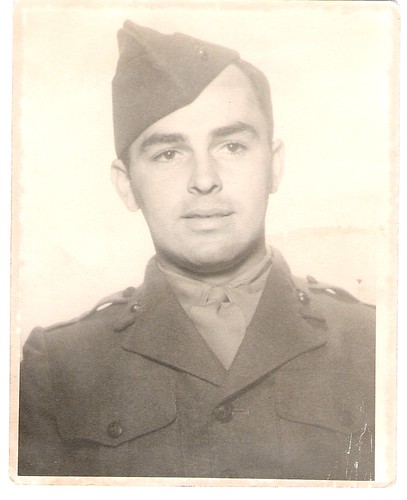
Jerry said that the KIA guys families didn't receive a copy as it may have proven to much of a painful reminder. The wounded guys didn't get one either.
While watching the show Jerry chuckled,
"Great ad for anti-smoking. Everyone smoked back then just like in Pacific. A carton of smokes was .50 cents. God, we threw out our gas mask to make room for cigarettes and socks. Profits from those sales paid for the Book."I had to go to Washington early Monday and told Jerry I was headed for the National Museum of the Marine Corps. He immediately gave me pointers on the visit. Must see, The LCVP ride into Iwo. He said that when he went, he was standing between his sons and when the shells passed over head, it was pretty realistic for an expert like himself. He said it was a must do. He was right.
Bob Leckie and the 1st MARDIV hit Cape Gloucester, close combat and sickness set in. Rain was constant. Many of the troops were done in. Jerry did say guys handled it differently. One guy named Sherlock, from Syracuse, NY. ( No relation.) had an issue at the end when the 4th was heading home from Pearl Harbor. Sherlock was a pretty fearless Marine and good in combat, Jerry said.
"It shook us that he had an issue at the end. Far from combat and close to shipping home."Not much was said overall about stress back then. It was called combat fatigue. The theory was to treat the guys close to the front line and try and get them back quick. We know now that stress effects people differently. Some of the World War Two vets had issues that were never addressed and suffered. It is handled much differently now. Servicemen and women are encouraged to talk it out and work through the emotions of combat. Jerry said that it probably should have been done back then but the events of the time were ever evolving and that stress was not an import issue at the time. Winning a World War and defeating the AXIS powers was the task at hand.
I've known Jerry for most I've my adult life. In our talks I've realized he has experienced close quarters combat for extended periods of time. If you have read anything about combat in the Pacific Theater of Operations it was brutal, close, and at times hand to hand.
I doubt most of you can envision Jerry as a battle hardened Marine Rifleman. Look at any picture of a Combat Marine throughout time and they all have a certain expression "The Look". From going over the wall at Peking, Belleau Wood, Guadalcanal, Peleilu, Saipan, Iwo Jima, Chosin Resevoir, Hue, Hill 881, Beirut, Afghanistan, Fallujah and places in between "THE LOOK". The Marines have spilled their share of Blood to keep this country free.
To hear Jerry say he walked off Iwo Jima with only 150 guys from a regiment of 900 strong is chilling. So the next time you complain about your mundane little life, stop. Think about all the service men and women who have sacrificed over time. What they have seen and done has changed them forever.
"You have never lived until you have almost died. And for those that fight for it, life has a certain flavor that the protected shall never know."
Truly if you know Jerry, he is a man who cherishes his family and is extremely proud of his sons and daughters. Material things don't mean alot to him. It's his family that has always remained important. Combat changes people and how they live their lives after speaks volumes to the strength of character.
"Freedom isn't free, but the Marine Corps will pay most of your share."
Ned Dolan
Sunday, March 28, 2010
Pacific Part Three Sunday Night
Another great night watching Pacific. I got a few questions in to Jerry.
What branch of the service was Paul Brousseau in.
How about Vin Campbell?
Jerry was asked at the VA why he and others didn't talk about the War. He told me he responded.
Jerry chuckled about the MP's showing up at the bar. When the bottles started coming there way he began laughing.
Jerry remarked about the Marines being issued Garands in Australia. When he got to Camp Lejuene he was issued a Garand. Jerry said alot of the Snipers carried Springfields. Once Jerry got his assignment in Hawaii for 1st Joint Assault Signal Company (JASCO), he requested a Carbine. Jerry and two others were issued the Carbine.
He fired the Garand for record along with the Carbine. He did shoot the Browning Automatic Rifle, .30 Caliber MG and the .50 Cal Browning M2. In case something happened he could operate those weapons. He shot the 1911A1 Colt .45 ACP Pistol. His buddy Jones had a Colt .44 Single action pistol. Jones was a cowboy from Colorado.
What happened to Jones I asked. Jones was killed at Iwo Jima. Jerry recounted his time with Jones and he on Iwo. Semper Fi JONES.
Liberty. Jerry got liberty from 12:00pm to 6:00pm.
Guys were lucky to go to Australia. Jerry said that a lot of girls from Australia and New Zealand married Marines.
Oh by the way. Jerry says you can make a great cup of coffee in a Steel Pot. The M1 Helmet! He forgot to mention that at his presentation at the VA.
On Steve Cileli.
The Marines of the 1st MARDIV are shipping out for a mission in the Pacific. John Basilone has gotten the Congressional Medal of Honor (CMH). Basilone is headed Stateside to raise money for the war effort. Jerry says it's getting good!
"Goodnight Chesty Puller whereever you are."
Recommended reading by Jerry: "Goodbye Darkness: A Memoir of the Pacific War." William Manchester
What branch of the service was Paul Brousseau in.
"He was in the Army and served in Europe. He had a brother that was in the Army. He was killed, I think, in Italy."
How about Vin Campbell?
"Oh he was in the Army. He was a mechanic. I met him at Fort Shafter. You know Fran went out to California and just missed him. He was on a boat for Hawaii. He couldn't get off. She said she would have married him in California!"
Jerry was asked at the VA why he and others didn't talk about the War. He told me he responded.
"No one would believe what I had been through. They'd never understand what happened. We just moved on with our lives. I think the government made a mistake. They should have taught the history and told in schools, what happened in 1946 after the war ended."
Jerry chuckled about the MP's showing up at the bar. When the bottles started coming there way he began laughing.
"I was involved in a couple of those. As an MP. I was teamed up with a Sailor. At any given time, you'd have 70,00 sailors and Marines on liberty. I was told to report to the Provost Marshal. Geez, I just started this and I'm already in trouble. Turned out his name was Cardi and he was from Pawtucket. I went to school with his brother!"
Jerry remarked about the Marines being issued Garands in Australia. When he got to Camp Lejuene he was issued a Garand. Jerry said alot of the Snipers carried Springfields. Once Jerry got his assignment in Hawaii for 1st Joint Assault Signal Company (JASCO), he requested a Carbine. Jerry and two others were issued the Carbine.
He fired the Garand for record along with the Carbine. He did shoot the Browning Automatic Rifle, .30 Caliber MG and the .50 Cal Browning M2. In case something happened he could operate those weapons. He shot the 1911A1 Colt .45 ACP Pistol. His buddy Jones had a Colt .44 Single action pistol. Jones was a cowboy from Colorado.
"Jones was good with that pistol. He used it to shoot animals back home."
What happened to Jones I asked. Jones was killed at Iwo Jima. Jerry recounted his time with Jones and he on Iwo. Semper Fi JONES.
Liberty. Jerry got liberty from 12:00pm to 6:00pm.
"I never ran int any barbers that were men in Hawaii. They were all women. So one of them asked me to go to a dance at her church. I went to the dance and it was getting around 9:30 or so. We headed back and were trying to hitch a ride. Bad idea. The jeep that stopped, it was my commander. 24 hours of extra duty." Of course Jerry starts laughing.
Guys were lucky to go to Australia. Jerry said that a lot of girls from Australia and New Zealand married Marines.
Oh by the way. Jerry says you can make a great cup of coffee in a Steel Pot. The M1 Helmet! He forgot to mention that at his presentation at the VA.
On Steve Cileli.
"You can tell Steve is MARINE. I don't care where you go, that guy is the epitome of MARINE. He is just so squared away. He was like guys I served with. You know that were ever you went, there are some guys that stand out as MARINES. Everything he does, the way he does it. He's a MARINE! He just is."
The Marines of the 1st MARDIV are shipping out for a mission in the Pacific. John Basilone has gotten the Congressional Medal of Honor (CMH). Basilone is headed Stateside to raise money for the war effort. Jerry says it's getting good!
"Goodnight Chesty Puller whereever you are."
Recommended reading by Jerry: "Goodbye Darkness: A Memoir of the Pacific War." William Manchester
Subscribe to:
Posts (Atom)